
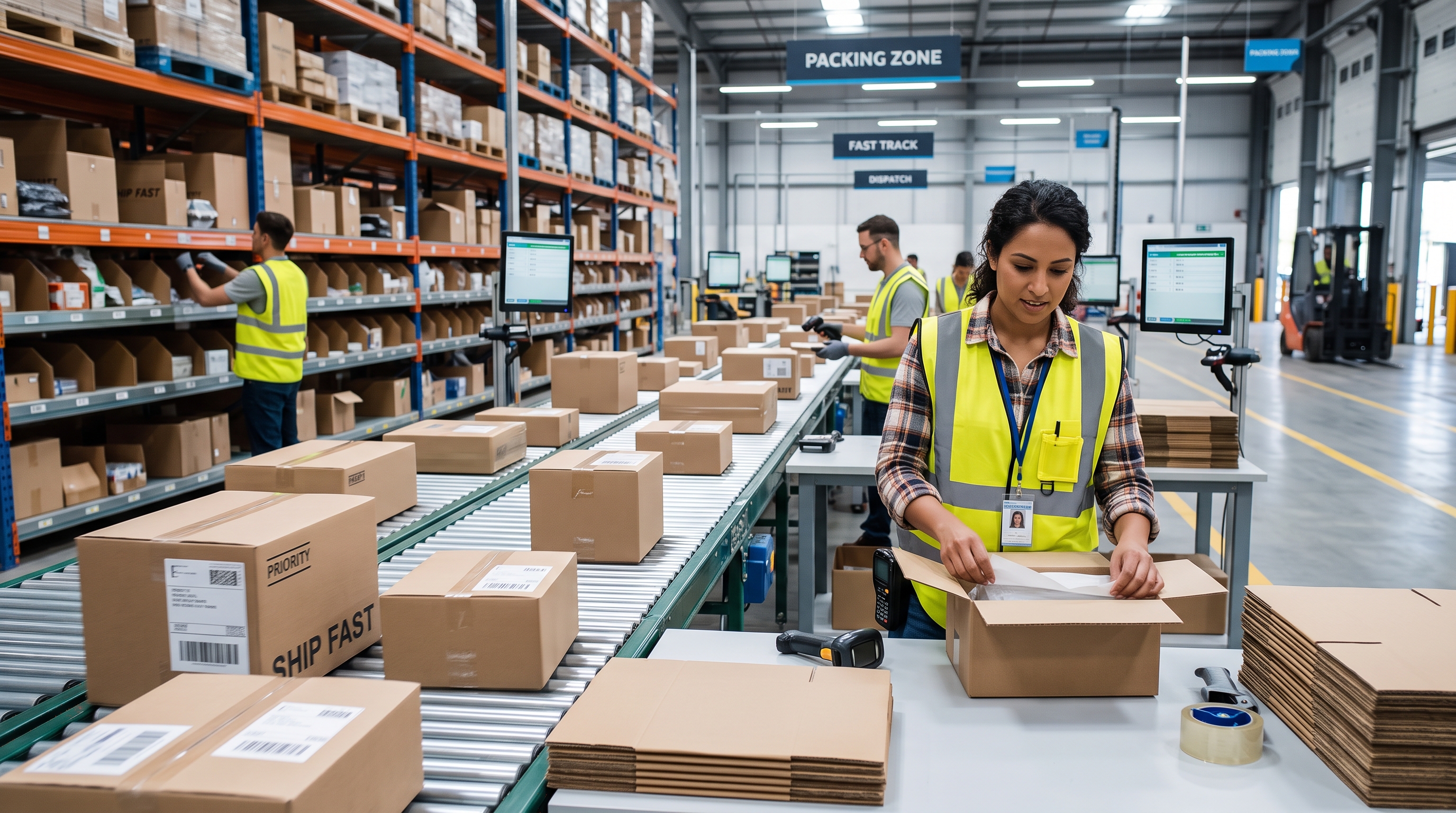
The first time a client asked me why their order fulfillment process took four days to get a package out the door, I expected to find a broken system. Instead, I found a stockroom where the best selling product sat on the top shelf at the very back, a packing table with three different sizes of tape and no scale, and a printer that jammed every twentieth label. In other words, nothing was broken. Everything was just slightly slow, and slightly slow multiplied across two hundred orders a day eventually turns into a customer service problem.
That is the part most people miss about the order fulfillment process. Online stores rarely lose speed in one dramatic failure. Rather, they lose it in small leaks that nobody notices, because each one only costs a few minutes. After years of working inside warehouses, garage operations, and third party logistics floors, I have learned that shipping faster is mostly about finding those leaks and then closing them one at a time.
For that reason, this guide walks through how the order fulfillment process actually works, where stores lose time, and what I have seen work when a business wants to get packages out the door the same day an order comes in.
Why Speed Now Shapes Every Order Fulfillment Process
A few years ago, a store could get away with “ships in three to five business days” printed under the Add to Cart button. However, that window has closed.
To begin with, online buying keeps growing faster than retail as a whole. The U.S. Census Bureau reported that retail ecommerce sales reached $340.2 billion in Q2 2026, up 12.2% from a year earlier, and made up 17.1% of total retail sales on a seasonally adjusted basis. More orders online means more competition for the same shopper, and delivery is one of the first places they compare stores, a pattern covered in our look at ecommerce trends for 2026.
At the same time, expectations are moving in only one direction. Ryder’s 2026 consumer study, based on 1,160 online shoppers, found that expectations for one to two day delivery hit a four year high. In addition, 76% of shoppers said fast shipping matters more to them than picking a specific delivery date. Similarly, AlixPartners’ 2026 Home Delivery Survey found that the longest shoppers will wait for free shipping has dropped to an average of 2.6 days, down from roughly 3.5 days over the prior five years.
Moreover, the cost of missing that window is real. According to the same survey, 55% of consumers said that after one late delivery with no compensation, they would be less likely to buy from that retailer again or would stop shopping there entirely.
So speed is no longer a nice extra. Instead, a reliable order fulfillment process is part of what the customer thinks they are buying.
What the Order Fulfillment Process Actually Includes
When I explain the order fulfillment process to new store owners, I usually describe it as everything that happens between “payment approved” and “package in the customer’s hands.” On top of that, it includes the parts that happen before and after, because those make the middle possible.
Shopify describes order fulfillment as every step involved in handling a customer purchase, from receiving orders and managing inventory through packaging, delivery, returns, reorders, and complaints, with shipping sitting inside that larger umbrella. That distinction matters. After all, plenty of stores obsess over carrier rates and ignore the six other steps where most of the delay actually lives.
With that in mind, here is the full flow as I map it for clients.
Step 1: Receiving Inventory Starts the Order Fulfillment Process
Every fast shipment starts with a slow, boring task: getting stock off the truck and onto a shelf where someone can find it. For example, if received inventory sits in boxes by the dock for two days, your website is selling products you technically own but cannot ship.
The time from truck arrival to “available to pick” is called dock to stock time. According to the Warehousing Education and Research Council’s 2025 DC Measures report, best in class operations get new stock put away and recorded in under 3.5 hours. Still, smaller stores often run days longer than that without realizing it, simply because nobody tracks the timestamp.
That is why my rule for clients is simple. Nothing gets listed as available until it has a physical location and a scan record. That one habit, a core part of solid ecommerce inventory management, prevents a surprising number of oversells.
Step 2: Storage and Slotting for a Faster Order Fulfillment Process
Slotting is deciding where each product lives. At first it sounds trivial, at least until you watch a picker walk the length of a building forty times a day to grab the same item.
Ideally, your fastest movers belong closest to the packing station, at waist height, in clearly labeled bins. Meanwhile, slow movers can go high, low, or far back. First, I pull ninety days of sales data. Next, I rank every SKU by units shipped. Then I rearrange the top twenty percent before touching anything else. In one apparel warehouse I worked with, that single rearrangement cut average pick walking time almost in half, with no new equipment and no new staff.
Finally, revisit slotting every season. After all, the product that sold best in March is not always the one selling in November.
Step 3: Order Capture and Routing in the Fulfillment Process
Once a customer checks out, the order has to land somewhere a human or a system can act on it. For a single location store, that might just be a dashboard, whether you sell through Shopify or WooCommerce (our Shopify vs WooCommerce comparison covers how each handles orders). However, for a brand selling on its own site, a marketplace, and social channels, it gets messier fast.
Therefore, the goal at this stage of the order fulfillment process is that every order, from every channel, flows into one queue automatically. That single queue is the backbone of any omnichannel retail strategy. Otherwise, manual copying between platforms leads to duplicate shipments, missed orders, and the dreaded “I ordered a week ago and never got a confirmation” email. It also helps to run your store on reliable ecommerce hosting, since a slow or offline site can delay order syncs and confirmation emails.
In addition, if you operate more than one stocking location, routing also means deciding which location ships which order. That includes stores that are moving from brick and mortar to online and want to ship from the shop floor. Cin7 notes that once an order is confirmed, it has to be sent to the correct warehouse or fulfillment center for processing. Getting that rule right affects both speed and shipping cost, which I will come back to later.
Step 4: Picking, the Busiest Part of the Order Fulfillment Process
Picking is pulling the right items from the shelves. It is also where the biggest chunk of warehouse labor goes. In fact, picking usually accounts for 50% or more of warehouse labor costs, so even small gains there have a large financial effect.
Above all, the method you use matters more than how hard people work. Rabot’s benchmarks put single order picking at about 60 to 80 lines per hour, batch picking at 100 to 150, and zone picking with a conveyor at 150 to 250 or more. Even so, most small stores pick one order at a time because that is how they started. Consequently, switching to batch picking, where one person collects items for ten or twenty orders in a single walk, is often the cheapest speed upgrade available.
Likewise, accuracy matters as much as speed. A wrong item costs you return shipping, a replacement, a refund conversation, and sometimes a customer. Hopstack places the common warehouse benchmark for order picking accuracy at 99 to 99.5%, and it recommends barcode scanning of products and bin locations to reduce errors. So if your team is still picking by reading product names off a paper list, scanning is the upgrade I would make first.
Step 5: Packing Without Slowing the Order Fulfillment Process
Packing is where speed and brand experience collide. Store owners love custom tissue, stickers, and handwritten notes, and those touches are part of ecommerce personalization. I love them too, until they add ninety seconds to every order during a holiday rush.
For this reason, a fast packing station has everything within arm’s reach: the three or four box sizes that cover most of your orders, a scale, a label printer, tape, and filler. Every time a packer has to walk away from the table to grab something, you are paying for that walk.
I also push clients to build packing rules. For instance, if an order contains items A and B, use box size two. Similarly, if it contains a fragile item, add a specific wrap. When packers do not have to make decisions, they move faster and make fewer mistakes. On top of that, right sizing your boxes keeps dimensional weight charges down, which protects your margin on free shipping offers.
Step 6: Shipping and Carrier Handoff in the Order Fulfillment Process
This is the step everyone thinks of when they hear “fulfillment.” Yet by the time a package reaches it, most of the speed in the order fulfillment process has already been won or lost.
Two things matter most here. The first is your carrier cutoff time. For example, if your carrier picks up at 4 p.m. and your team finishes packing at 4:20 p.m., every order from that day just lost a full day. That is why I tell clients to work backward from the pickup time and set an internal order cutoff that gives the team a real buffer. Then show that cutoff at checkout, one of the simplest trust signals in ecommerce checkout optimization.
The second is distance. ShipBob explains that many brands split inventory across fulfillment centers in different parts of the country, so more orders ship to lower zones. Using three centers instead of one also lets more orders reach two day delivery via ground instead of costly air. Furthermore, Flowspace points out that last mile delivery makes up 53% of total shipping costs, which explains why placing inventory closer to customers pays off.
Of course, you do not need three warehouses on day one. Nevertheless, if your order data shows half your customers on the opposite coast from your stock, that is worth a serious look.
Step 7: Delivery Communication During the Order Fulfillment Process
Once the package is moving, your job shifts to keeping the customer informed. In my experience, a tracking link that actually works, a shipped confirmation sent the moment the label prints, and an honest delivery estimate do more for customer trust than shaving half a day off transit. That estimate should start on the product page, which is why it belongs in your product page SEO checklist too.
For example, I have watched stores cut their “where is my order” tickets dramatically just by sending tracking automatically instead of in a nightly batch. The package was not faster. Instead, the customer simply stopped wondering. Since most shoppers check tracking on their phones, text and push updates matter just as much as email, a point covered in our guide to mobile commerce.
Step 8: Returns as Part of the Order Fulfillment Process
Returns are part of the order fulfillment process whether you plan for them or not. Therefore, a clear return policy, a simple return label, and a dedicated area for inspecting and restocking returned goods keep returns from clogging up your outbound operation.
The most common mistake I see, however, is returned items sitting in a pile for weeks. That stock is money you already paid for. So if it is sellable, it should be back on a shelf and available online within a day or two.
Where Time Disappears in the Order Fulfillment Process
When I audit a fulfillment operation, I almost never start with software. Instead, I start with a stopwatch and a notebook. First, I follow ten orders from checkout to carrier scan. Then I write down every minute. Interestingly, the patterns repeat across almost every order fulfillment process I have reviewed.
Orders Waiting to Be Released
Many stores batch orders once or twice a day. As a result, if an order comes in at 10 a.m. and the team only pulls the queue at 2 p.m., four hours vanished before anyone touched it. Fortunately, releasing orders more often, or continuously, is usually free.
Inventory That Does Not Match the System
Nothing kills speed like a picker standing in front of an empty bin. Now someone has to search, call a manager, email the customer, and maybe split the shipment. Thankfully, regular cycle counts on your top sellers prevent most of this.
Address and Payment Holds
Orders flagged for fraud review or address problems can sit unnoticed for days. For that reason, someone needs to own that queue every single morning. Tunable fraud rules in your ecommerce payment gateway also keep good orders from getting stuck there in the first place.
Label Printing and Carrier Selection
If a packer has to choose a carrier and service level manually for each order, you are paying a skilled person to do what a shipping rule can do instantly. In short, automate it.
Missed Pickups
I mentioned cutoff times earlier, but it is worth repeating. A single missed pickup undoes every other improvement for that day.
Overall, the fix for most of these is not a big investment. It is visibility. Once you know where the minutes go, the solutions are usually obvious.
In House, 3PL, or Hybrid: Choosing Your Order Fulfillment Process
Every store eventually asks whether to keep fulfillment internal or hand it to a third party logistics provider. Amazon’s seller guide notes that some merchants run the order fulfillment process themselves, others use a third party service, and some combine both. Admittedly, there is no universally right answer, but there are honest tradeoffs.
Handling It Yourself
Running fulfillment in house gives you full control over packaging, quality, and timing. Because of that, it works well for stores with custom or fragile products, low daily volume, or a strong unboxing brand. It’s also where most owners begin when they start an online store. On the other hand, you carry the labor, the space, and the peak season stress.
Outsourcing to a 3PL
A 3PL gives you warehouse space, carrier discounts, and often multiple locations without signing leases. Consequently, it works well once you are shipping steady volume and your products are fairly standard. The downside, though, is less direct control and a contract you need to read carefully, especially around receiving fees, storage minimums, and error policies.
A Hybrid Setup
In practice, a hybrid model is what I recommend more often than people expect. Keep custom, high margin, or fragile items in house, and then send your simple, fast moving SKUs to a 3PL closer to your biggest customer regions. That way, you get speed where volume is high and control where it matters most.
Whichever path you choose, ask any partner one question before signing: what is your same day ship cutoff, and what percentage of orders actually meet it? Ultimately, the answer tells you more about their order fulfillment process than any sales deck.
Order Fulfillment Process Metrics I Watch Every Week
Simply put, you cannot speed up what you do not measure. These are the numbers I ask every client to track, even if it starts in a simple spreadsheet.
Order Cycle Time
This is the time from order placement to carrier scan. In my view, it is the single most honest measure of how fast you really ship.
On Time Shipment Rate
This is the share of orders that leave by the promised ship date. Notably, the Warehousing Education and Research Council’s 2025 DC Measures report lists best in class on time shipments at 99.5% or higher. Most growing stores are well below that, which is fine, as long as the number keeps moving up.
Picking Accuracy
This is correct orders divided by total orders picked. Below 99%, however, you are paying for errors in returns and reshipments.
Dock to Stock Time
This shows how quickly new inventory becomes sellable. Unfortunately, long dock to stock times quietly cause stockouts and oversells.
Cost Per Order
This is labor, packaging, and shipping divided by orders shipped. After all, speed improvements should not quietly double this number.
Where Is My Order Tickets
Although this is not a warehouse metric, it is a great proxy for whether customers feel informed.
Above all, review these weekly, not quarterly. A bad week caught early is a small fix, whereas a bad quarter caught late is a reputation problem.
A 30 Day Plan to Speed Up Your Order Fulfillment Process
When a client wants faster shipping but cannot afford a major overhaul, this is the plan I hand them.
Week One: Measure Your Current Order Fulfillment Process
First, track order cycle time for every order. Note when each order is placed, picked, packed, and scanned by the carrier. However, do not change anything yet. Just watch.
Week Two: Fix the Layout
Next, re slot your top selling items closest to the packing area. After that, set up a packing station where everything is within reach. Finally, standardize your box sizes around your most common orders.
Week Three: Fix the Flow
Then release orders more often. Also, set an internal cutoff time with a real buffer before carrier pickup. In addition, assign one person to clear fraud and address holds every morning, and switch to batch picking if your order mix allows it.
Week Four: Automate the Repetitive Parts
Lastly, add shipping rules so labels print with the right carrier and service automatically. Most of the best ecommerce platforms for small business support this natively or through an app. Likewise, turn on instant tracking emails, and start barcode scanning at pick and pack if you have not already.
At the end of the month, compare your order cycle time to week one. In my experience, most stores see a meaningful drop without hiring anyone. Better still, the team usually feels less rushed, not more.
Final Thoughts on a Faster Order Fulfillment Process
In the end, the stores that ship fastest are rarely the ones with the most expensive software or the biggest warehouses. Instead, they are the ones that respect every step of the order fulfillment process, from the moment a truck backs up to the dock to the moment a return gets restocked.
So if you take one thing from this guide, let it be this: follow your own orders. Watch ten of them move through your operation with a stopwatch in hand. Chances are, the delays you find will be smaller and more fixable than you expect. Fixing them, in turn, is how a good online store builds an order fulfillment process customers trust to show up on time, and that trust feeds the reviews and repeat visits that support everything in our ecommerce SEO guide.
Frequently Asked Questions
What is the order fulfillment process in ecommerce?
The order fulfillment process is the full sequence that gets an online order to the customer: receiving inventory, storing it, capturing the order, picking, packing, shipping, delivery communication, and returns. For a helpful overview of each stage, see Shopify’s order fulfillment checklist.
How long should the order fulfillment process take?
For in stock items, a strong target is shipping within one business day of the order. In fact, many competitive stores aim for same day shipping on orders placed before a set cutoff. Cin7’s guide to the fulfillment process walks through each step that affects that timeline.
What is the difference between the order fulfillment process and shipping?
Shipping is one step inside fulfillment. In other words, fulfillment covers everything from inventory management to packing and returns, while shipping is the movement of the package from your location to the customer. Shopify explains this distinction in its FAQ section.
What is a good order picking accuracy rate?
Most well run warehouses target 99% to 99.5% picking accuracy. Generally, barcode scanning and good slotting are the most reliable ways to get there, as covered in Hopstack’s picking accuracy guide.
Should a small online store outsource its order fulfillment process?
It depends on volume, product type, and where your customers are. For example, stores with steady volume and standard products often benefit, while stores with custom or fragile items may prefer keeping fulfillment internal or using a hybrid model. Amazon’s ecommerce fulfillment guide outlines the main options side by side.
How do multiple fulfillment centers speed up the order fulfillment process?
Storing stock closer to customers means packages cross fewer shipping zones. As a result, transit time gets shorter and costs drop. ShipBob’s shipping zones guide explains how distributed inventory works.
Which metrics matter most for a faster order fulfillment process?
Order cycle time, on time shipment rate, picking accuracy, and dock to stock time are the core four. Additionally, the WERC DC metrics summary from Yale lists best in class targets for each.
References
- U.S. Census Bureau. Quarterly Retail Ecommerce Sales Report
- Ryder. 2026 Ryder Ecommerce Consumer Study
- eMarketer. Fast Shipping Is Retail’s New Battleground
- Shopify. Order Fulfillment Checklist
- Amazon Sell. Ecommerce Fulfillment: How to Fulfill and Ship Orders
- Cin7. Key Steps for the Ecommerce Order Fulfillment Process
- Rabot. Essential Warehouse KPIs and How to Track Them
- Hopstack. Order Picking Accuracy
- ShipBob. Shipping Zones Guide for Ecommerce
- Flowspace. Understanding Shipping Zones
- Yale and WERC. Top 12 Distribution Center Metrics



Leave a Reply